 By admin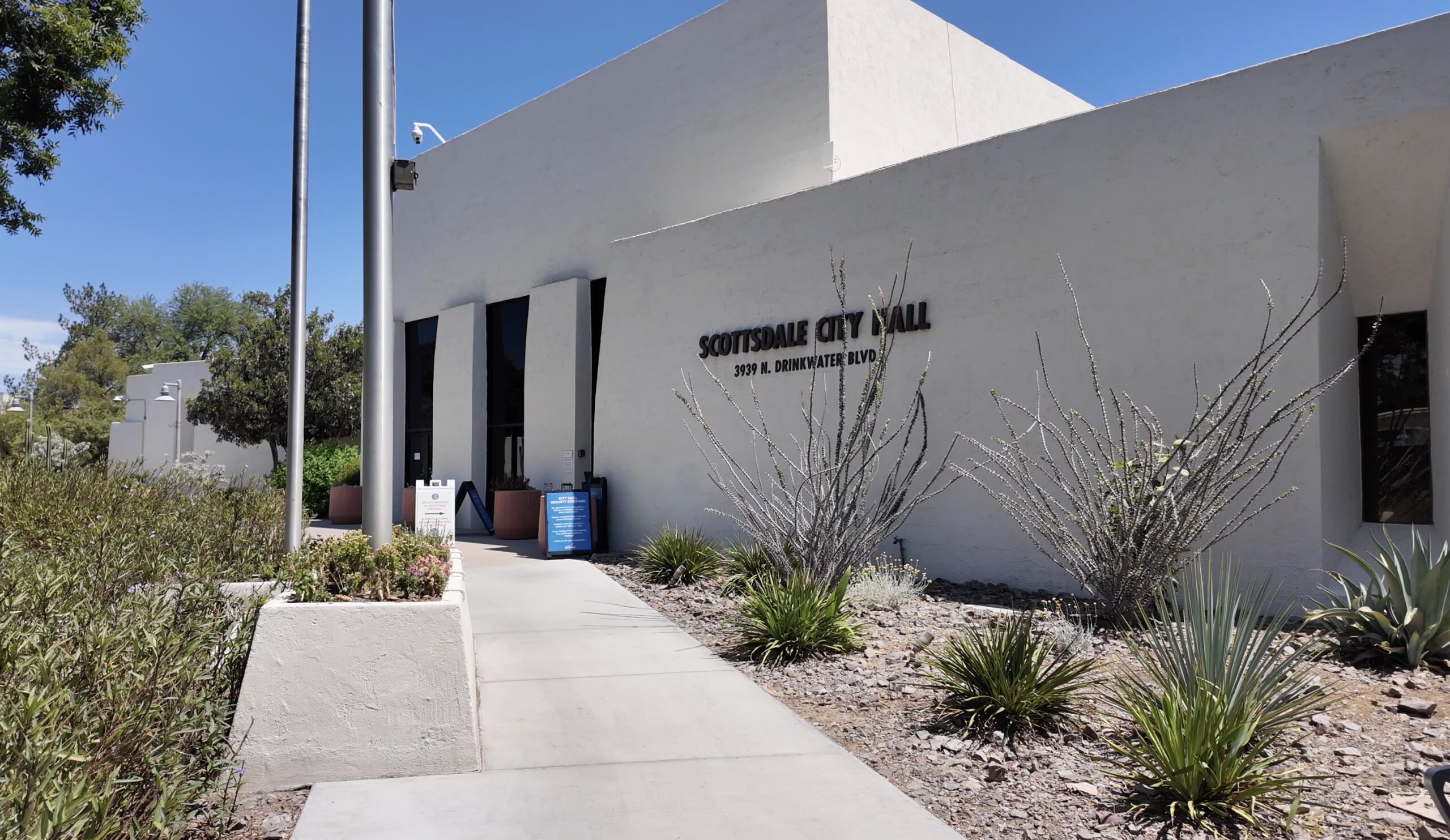
SCOTTSDALE, AZ — Eight candidates are running for three seats on the Scottsdale City Council.
Read more July discounts, weather-related deals, and freebies around the Valley
Scottsdale doesn’t have districts, so the mayor and the city council members represent the entire 243,000-population city. A candidate has to receive the majority of the votes cast to win a seat outright in July.
Candidates include incumbents Barry Graham and Solange Whitehead and challengers Crystal Carroll, Raoul Zubia, Ethan Knowlden, Eric Sloan, Bob Littlefield and Michelle Ugenti-Rita.
Historically, about two-thirds of Scottsdale voters have voted by mail, according to Scottsdale City Clerk Ben Lane.
Scottsdale City Hall does not offer in-person voting for the primary election, but you can drop your ballot at City Hall at 3939 N Drinkwater Blvd. More details, including deadlines, are available on the city’s website.
Reporter Anne Ryman asked the candidates to answer five questions. Some did. Some did not. Here are their replies.
Barry Graham
1. Why are you running for this seat? As the only conservative incumbent running for re-election to the City Council, I will continue restoring resident values to City Hall. That means scrutinizing taxpayer dollars, protecting our city from harmful ideology, and standing up to special interests. For example, I said “no” to Axon’s 1,900 apartments and “no” to canceling the 26,000-signature resident referendum on the company’s apartments. Now, Axon’s front group “Better Together” is spending big to attack me. I’m paying the price for standing up for residents’ quality of life — but it’s worth it.
2. What steps should Scottsdale take to prepare for anticipated cuts to its Colorado River supply — and do you support Advanced Water Purification for drinking water as part of that solution? Scottsdale Water confirms that our water supply is “reliable, secure, and actively managed.” While we have planned for drought for decades, we will continue pursuing conservation measures and water acquisitions — including water-rights acquisitions and raising Bartlett Dam. Unfortunately, some candidates are using scare tactics to push an experimental “toilet-to-tap” program they call “Advanced Water Purification.” But they are ignoring the massive costs and risks to our economy, taxpayers’ pocketbooks, tourism industry, and residents’ health. Leaders should use facts to calm fears — not exploit them for political gain.
3. How do you balance growth with quality of life and infrastructure capacity? Development should support our tourism industry, enhance our city’s character, and — most importantly — be supported by residents…City Council must stand with residents, not special interests.
4. What is the single biggest challenge facing Scottsdale, and what would you do about it? Special interests, notably Axon’s front group “Better Together,” are pouring money into the City Council race to rig the election and elect their hand-picked candidates. Axon previously asked for 2,550 apartments…If Axon can elect pro-apartment candidates, they can simply apply to increase it back to 2,550 apartments or more. I will continue standing with residents.
5. Are you satisfied with the way public comment is taken at current council meetings? If not, what changes would you like to see? Some candidates falsely claim public comment was eliminated. In reality, residents were frustrated with being “cut in line,” creating last-come, first-served chaos. The Council thoughtfully reordered meetings to prioritize residents speaking on scheduled items — such as apartment rezonings in their neighborhoods — while expanding opportunities for non-agenda items. Public comment is vital and must work for everyone — and it must also be managed better by the mayor, who has allowed it to spin wildly out of control.
Bob Littlefield
1. Why are you running for this seat? For years, overdevelopment has taken a heavy toll on Scottsdale’s special character and high quality of life. Clogged roads, blocked views, higher taxes and overburdened infrastructure have been the legacy of the overdevelopment that previous City Council majorities have approved. Now, overdevelopment poses an even greater threat to Scottsdale’s residents – possible water shortages!
2. What steps should Scottsdale take to prepare for anticipated cuts to its Colorado River supply — and do you support Advanced Water Purification for drinking water as part of that solution? No. I believe this program is untested, unproven and expensive, but more to the point it is clear this is being proposed not to serve the needs of our current residents but as a way to justify even more overdevelopment.
3. How do you balance growth with quality of life and infrastructure capacity? According to our city Planning Department, there are upwards of 10K apartments (depending on how you count them) approved by previous councils that have yet to be built. No more are necessary for the foreseeable future.
4. What is the single biggest challenge facing Scottsdale, and what would you do about it. Overdevelopment. The first thing I would do to address it is to vote to stop it.
5. Are you satisfied with the way public comment is taken at current council meetings? If not, what changes would you like to see? Yes. When the Council moved public comment for non-agendized items to the end of the meeting some complained they were trying to diminish public comment for non-agendized items. But actually this is common practice among many Valley cities such as Phoenix, Chandler and Glendale.
Ethan Knowlden
1. Why are you running for this seat? Running for public office was not on my bucket list. However, I love Scottsdale and want to help preserve the qualities that make our city exceptional while responsibly planning for its future. Scottsdale faces increasing pressure from growth, infrastructure demands (especially water security), and changing economic conditions. Scottsdale needs thoughtful, transparent leadership—leadership that listens to residents and experts alike and prioritizes consensus over chaos—to balance these forces while protecting neighborhoods and maintaining a high quality of life. I believe my skills, experiences, temperament, and energy are needed on this Council.
2. What steps should Scottsdale take to prepare for anticipated cuts to its Colorado River supply — and do you support Advanced Water Purification for drinking water as part of that solution? Water security is our biggest issue. But Scottsdale has been preparing for the loss of cheap, reliable CAP (Colorado River) water for decades. We need to reaffirm our commitment to the Council-approved Water Strategic Plan 2025–2030 and move aggressively on the capital investments outlined in that plan. These include implementing automated meter infrastructure, improving groundwater recovery and SRP pumping capabilities, introducing Advanced Purified Recycled Water into direct potable reuse, and participating in regional efforts such as discussions surrounding Bartlett Dam and additional APRW facilities. As a reminder, all water is recycled, and Scottsdale’s facility is state of the art.
3. How do you balance growth with quality of life and infrastructure capacity? Scottsdale’s General Plan, voter-approved by a wide margin in 2021, anticipates and encourages thoughtful, balanced growth over the next decade. Despite mischaracterization by others, Scottsdale’s population has only grown by two percent over the last four years. I expect that slow pace of growth to continue, as the city is largely built out. Most development going forward will be redevelopment and infill. When evaluating development proposals, water, infrastructure burden, and character of adjacent neighborhoods must be considered. Scottsdale is a unique city, and balancing the natural evolution of communities and the demand for housing with the desire to maintain the character of our diverse neighborhoods is the job of City Council. Deviations from the General Plan should be rare, built on consensus and public support, and clearly justified. Part of what makes Scottsdale attractive is the quality of life our community provides. Scottsdale will remain “open for business” by fairly assessing development proposals, but also by adequately funding our police and fire services, securing water security for our community, supporting arts and cultural institutions, and maintaining our beautiful parks and Preserve.
4. What is the single biggest challenge facing Scottsdale, and what would you do about it? Water security is Scottsdale’s biggest challenge, but since I addressed that in my response to Question 2, let me address our second biggest challenge: restoring our city’s reputation. Council conduct, limited engagement with residents on importantissues, abrupt departures from long-standing policies, litigation involving the City, conflict with major employers, and attempts to circumvent state housing laws have contributed to a perception that Scottsdale is less welcoming to new residents and business investment. Rather than being seen as part of the problem, Council needs to start being seen as part of the solution, listening to residents and working together to build consensus around policies that address the problems our city faces.
5. Are you satisfied with the way public comment is taken at current council meetings? If not, what changes would you like to see? I prioritize respectful dialogue, data-driven—but not data-exclusive—decision-making, and finding common ground. Council functions best when its members listen first then work toward practical solutions. Council must engage subject matter experts and balance that input against residents’ concerns. In my legal and business career, I was trained to understand both sides of a negotiation. Without that understanding, mutual agreement is unlikely. That said, no Council decision will ever receive universal praise. And the public has the absolute right to tell Council they got it wrong—in public comment that must be returned to the start of our meetings.
Raoul Zubia
1. Why are you running for this seat? As I speak with folks across Scottsdale, the message is remarkably consistent. People are exhausted by the noise and ready to move past the chaos. They deserve leadership that is steady, substantive, and grounded in the realities of daily life. Good governance isn’t about political theater; it’s a practical commitment to delivering on the fundamentals, ensuring safe streets, a livable community, and an economy that creates real opportunity. By honoring Scottsdale’s heritage and focusing on common-sense solutions, we can restore purpose to the city council. If we prioritize results over division, I am deeply confident that our best days lie ahead.
2. What steps should Scottsdale take to prepare for anticipated cuts to its Colorado River supply — and do you support Advanced Water Purification for drinking water as part of that solution? Water resiliency in Scottsdale is about the discipline of building a balanced, reliable portfolio.
First, I absolutely support expanding Advanced Water Purification, including direct potable reuse. It’s a common sense, long-term investment in local control that ensures we maximize every drop we already have.
Second, we must maintain robust aquifer banking to store water during surplus years, while simultaneously scaling up cost-effective, community-facing incentives like turf removal rebates to lower demand.
But true security requires us to stop playing political games with critical infrastructure. Moving long-term priorities like the Bartlett Dam project out of the Capital Improvement budget is shortsighted. We need to get serious, think ahead responsibly, and fund our future.
3. How do you balance growth with quality of life and infrastructure capacity?
Balanced development isn’t about freezing a city in time or growing without intention. It’s about a generational promise: building a future where our children can afford to live, without sacrificing the unique character that brought us here.
When evaluating any project, we must look through a lens of pragmatic stewardship. In a desert community, which starts with a hard look at the data on water security. Every development must fit squarely within our assured water supply without straining infrastructure.
Second, we need contextual compatibility. We must ask whether the density, traffic, and design respect the neighborhood’s history while delivering tangible value to Scottsdale families. That’s how you manage growth responsibly, by choosing substance over ideology.
4. What is the single biggest challenge facing Scottsdale, and what would you do about it?
The single biggest challenge facing Scottsdale is water. When you sit down and look at the math, water security isn’t just an environmental issue tucked away on a spreadsheet. It is the defining, structural challenge for the entire future of Scottsdale. We are facing a hard reality on the Colorado River, and we can no longer afford to kick resource management down the road for the next generation to solve.
That’s why the very first thing we must do is reverse recent council decisions and restore funding for our Advanced Purified Recycled Water infrastructure immediately. Securing a 100-year water supply doesn’t happen by accident; it requires steady, data-driven investments today. That is how we ensure Scottsdale remains a resilient, livable, and prosperous community for decades to come.
5. Are you satisfied with the way public comment is taken at current council meetings? If not, what changes would you like to see?
I am absolutely not satisfied with how public comment is handled at our council meetings. Banishing it to the very end of the agenda isn’t a strategy for efficiency; it’s a strategy for exhaustion that forces working parents and small business owners to wait until late at night just to be heard.
The change we need is immediate. Put public comment back at the front of the meeting where it belongs.
Local government is a democratic contract. Citizens have a fundamental right to look their elected officials in the eye, confront their council members, and voice grievances. Moving that opportunity to the end treats resident input like an afterthought. We need to restore transparency and bring the public back to the front.
Crystal Carroll
1. Why are you running for this seat?
I’m running because I love Scottsdale, and I believe our city deserves leaders who put residents first—not politics. Take a close look at who is running, and right now I’m in a field that includes career politicians and even a lobbyist with very little real-world experience or success managing money, people or building things! We do not want lobbyists and career politicians using our city for their own interests—we need leadership focused on the people who live here.
As a local business owner and entrepreneur, I’ve spent my career creating jobs, managing budgets, solving problems, and making difficult decisions. I bring real-world experience rather than a career in politics.
Over the last several years, I’ve watched our city become increasingly divided. Too often, residents feel unheard, transparency has declined, and important decisions have been made without enough public involvement or actual data. I want to help restore trust in local government by focusing on transparency, fiscal responsibility, public safety, and common-sense leadership that brings people together.
As a mother of four, I want more for my children and am committed to helping build a city where they can thrive. I want to leave behind a great Scottsdale that my children and future grandchildren will be proud to call home.
Read more Emotional procession held for three firefighters killed in wildfire on Colorado-Utah border
Let’s work together to put Scottsdale residents back at the center of every decision.
2. What steps should Scottsdale take to prepare for anticipated cuts to its Colorado River supply — and do you support Advanced Water Purification for drinking water as part of that solution?
Water security is one of Scottsdale’s most important long-term responsibilities.
We need a diversified strategy that includes conservation, expanding water recycling, investing in infrastructure, protecting our groundwater supplies, and planning responsibly for future growth.
I support Advanced Water Purification as one tool that deserves serious consideration. The technology has been successfully implemented in other communities and produces water that meets or exceeds drinking water standards. If Scottsdale moves forward, it should be based on sound science, rigorous testing, complete transparency, and public education so residents fully understand the process and have confidence in the system. The takeaway is clear: we must act now with smart, science-based solutions to secure Scottsdale’s water future.
3. How do you balance growth with quality of life and infrastructure capacity?
Growth should never outpace infrastructure.
Before approving major developments, we need to ensure we have adequate water resources, transportation capacity, public safety staffing, parking, and supporting infrastructure. Scottsdale’s unique character is one of our greatest assets, and we must protect our neighborhoods while allowing thoughtful, strategic growth in appropriate areas.
I support smart growth—not growth at any cost. Every project should improve Scottsdale, not simply make it bigger. Let’s commit to growth that strengthens our community rather than strains it.
4. What is the single biggest challenge facing Scottsdale, and what would you do about it?
I believe Scottsdale’s biggest challenge is restoring public trust in city government.
Residents deserve to know that their voices matter, their tax dollars are being spent wisely, and decisions are being made openly. That means greater transparency, stronger public engagement, fiscal discipline, and leadership that listens before deciding.
When people trust their local government again, we can work together more effectively on every other issue—from water and transportation to public safety and economic development. Rebuilding trust starts with leadership that listens, and I’m committed to earning that trust every day.
5. Are you satisfied with the way public comment is taken at current council meetings? If not, what changes would you like to see?
No.
Public comment should be returned to the beginning of City Council meetings so residents can speak before decisions are made. Too many people cannot stay for meetings that last several hours, and moving public comment later creates the perception that public input is less important.
Transparency isn’t just about providing information—it’s about giving residents a meaningful opportunity to participate in their government. I believe we should make it easier, not harder, for citizens to be heard. Let’s make sure every resident has a real voice in the decisions that shape our city.
Eric Sloan
1. Why are you running for this seat?
I am running for Scottsdale City Council to provide common sense, stability, and resident-focused leadership. Scottsdale is an exceptional place to live, work, and raise a family.
My goal is to preserve what makes Scottsdale unique while ensuring the city serves all residents.
Public safety is my top priority. Scottsdale families should feel secure in their homes, schools, parks, and businesses.
I will ensure police, fire, and first responders have the necessary staffing, equipment, technology, and training. I am also committed to keeping taxes low, protecting property values and open spaces, supporting local businesses, and ensuring city government remains practical, efficient, and accountable.
2. What steps should Scottsdale take to prepare for anticipated cuts to its Colorado River supply — and do you support Advanced Water Purification for drinking water as part of that solution?
Scottsdale requires a comprehensive, long-term water strategy grounded in facts, transparency, and responsible planning. In anticipation of potential Colorado River reductions, the city should diversify its water sources, invest in conservation, protect groundwater, expand reuse where appropriate, and align growth decisions with actual infrastructure capacity.
I support evaluating Advanced Water Purification as part of the solution, provided the process is careful, transparent, and earns public trust. Scottsdale already has significant experience with advanced treatment and water reuse. If purified water is considered for drinking, residents must receive clear information on safety, cost, monitoring, reliability, and long-term needs. Water security should not be influenced by politics or fear. The standard must be safe, reliable, fiscally responsible, and fully transparent.
3. How do you balance growth with quality of life and infrastructure capacity?
Growth must not compromise Scottsdale’s quality of life. I support responsible economic growth, local businesses, job creation, and innovation, but development should align with the community’s character and be supported by adequate infrastructure and city services.
Scottsdale residents expect clean neighborhoods, safe streets, strong property values, open space, and thoughtful planning. I will assess growth by asking: Is the infrastructure sufficient? Does it protect neighborhoods? Does it benefit the community? Does it respect taxpayers? Scottsdale can support both business and quality of life, but this requires discipline, transparency, and common sense at City Hall.
4. What is the single biggest challenge facing Scottsdale, and what would you do about it?
Scottsdale’s greatest challenge is preserving our quality of life while preparing for the future. This includes public safety, water security, infrastructure, responsible growth, and maintaining affordability for families, seniors, and small businesses.
My approach prioritizes residents. I will fully support police, fire, and first responders, insist on responsible budgeting, protect neighborhoods and property values, support local businesses, and ensure city decisions are based on long-term infrastructure planning. Scottsdale needs practical, results-oriented leadership, not political drama.
5. Are you satisfied with the way public comment is taken at current council meetings? If not, what changes would you like to see?
Residents deserve a meaningful voice at City Hall. Public comment should be accessible, respectful, and structured to ensure all voices are heard while maintaining order in meetings.
I support maintaining robust opportunities for residents to address issues affecting their neighborhoods, taxes, safety, water, and quality of life. The city should ensure the process is straightforward, allow both written and in-person input, and schedule public comment at times convenient for residents. Council meetings should be efficient, but not at the expense of public participation. Scottsdale thrives when City Hall listens.
Michelle Ugenti-Rita
1. Why are you running for this seat?
I’m running for Scottsdale City Council because I love this city and refuse to stand by while California-style liberal policies threaten the values that have made Scottsdale exceptional. As a Scottsdale native and a 12-year veteran of the Arizona State Legislature, I understand what makes our city special: safe neighborhoods, a thriving tourism economy, world-class arts and culture, the McDowell Sonoran Preserve, and our independent Western spirit.
Residents can count on me to preserve Scottsdale’s unique character, protect them from reckless overdevelopment and divisive political ideology, stand up to special interest, safegard their tax dollars, and keep our city safe, prosperous, and uniquely Scottsdale for generations to come.
I offer a 15-year proven record of doing what I say, delivering results, and never losing sight of who I work for: the voters. I would be honored to earn your vote.
2. What steps should Scottsdale take to prepare for anticipated cuts to its Colorado River supply — and do you support Advanced Water Purification for drinking water as part of that solution?
Managing growth responsibly is essential as we prepare for potential reductions to our Central Arizona Project water allocation. Scottsdale has done an excellent job conserving water and planning for the future, including exploring additional water rights from sources beyond the Colorado River. However, I oppose forcing Scottsdale residents to drink treated wastewater through “toilet-to-tap.” This costly proposal carries a price tag exceeding $250 million while raising legitimate public concerns about safety and reliability. Ultimately, decisions regarding Colorado River allocations will be made at the federal level. With my legislative experience, relationships, and understanding of the state and federal negotiation process, I will work to ensure Scottsdale has a strong voice at the table and that our city’s long-term water security is protected.
3. How do you balance growth with quality of life and infrastructure capacity?
Growth is inevitable, but overdevelopment is a choice. I’ll support responsible and intentional growth that strengthens our economy while ensuring our infrastructure, water supply, and public safety keep pace. Scottsdale’s quality of life is our greatest asset, and I’ll always put residents ahead of special interests.
4. What is the single biggest challenge facing Scottsdale, and what would you do about it?
The biggest issue is restoring trust and accountability in local government. Too often, candidates campaign on preserving neighborhoods and open space, then vote for policies that dramatically change them: large-scale apartment projects, homeless shelters in residential areas, and using local hotels to house immigrants. We need councilmembers who are upfront about their REAL priorities and who are committed to balancing growth with quality of life.
5. Are you satisfied with the way public comment is taken at current council meetings? If not, what changes would you like to see?
During my years in the Legislature, I chaired several committees and always encouraged public comment because I believe it fosters robust debate and helps elected officials make better-informed decisions. I’ll bring that same philosophy to the City Council.
Solange Whitehead
ABC15 has not yet received a questionnaire back from candidate Solange Whitehead.
Read more Former NFL running back Chris Johnson reveals he has been diagnosed with ALS