 By admin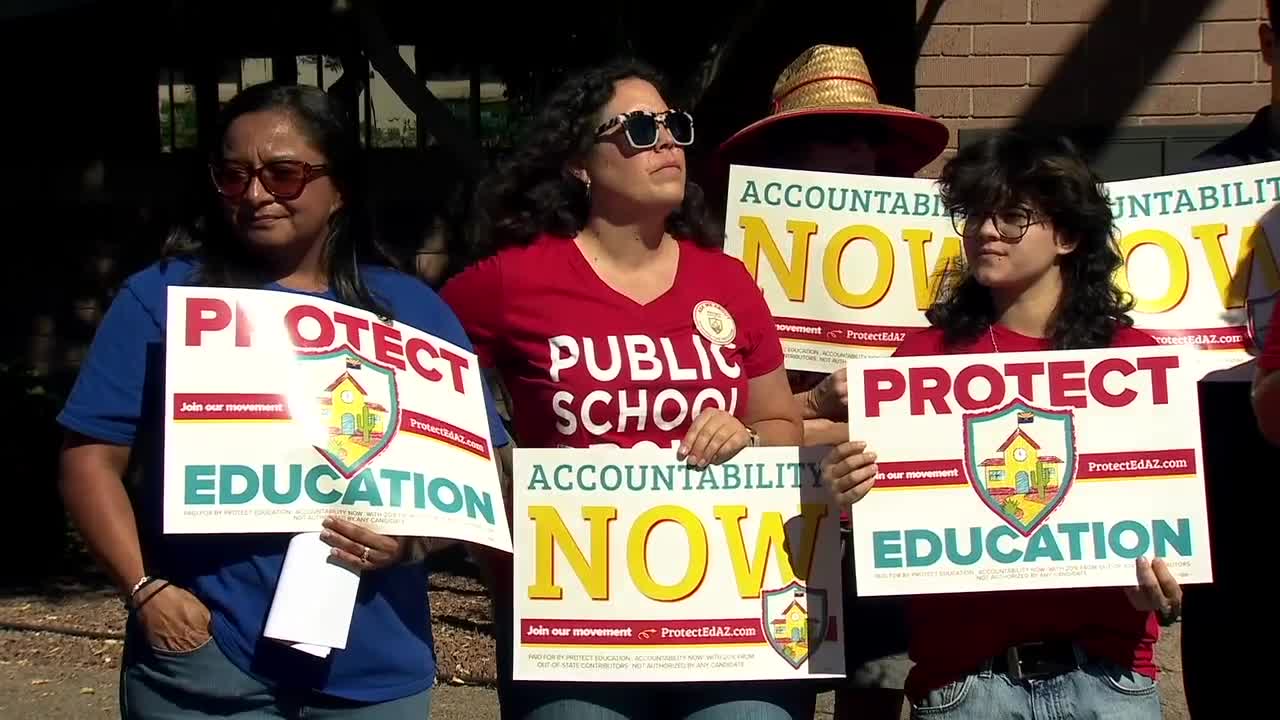
A deal to reform Arizona’s school voucher program in a special session of the Legislature died Monday, just days before signatures to put reforms on the November ballot are due.
Read more Scottsdale election controversy: 3 candidates accuse Axon of meddling in city council race
Negotiations for changes to the state’s Empowerment Scholarship Account program collapsed Monday after the Republicans leading the Arizona House and Senate backed a different proposal from U.S. Rep. Andy Biggs, who is running for the Republican nomination for governor.
“After Biggs and his extremist allies intervened, their involvement left the Republican caucus divided and unable to negotiate in a serious or constructive way,” the Arizona Education Association said in a statement Monday. “As a result, we are no longer willing to participate in what has become a political circus. If Republican leadership cannot present a unified, credible proposal, there is no basis for further discussions.”
House Speaker Steve Montenegro had been trying to revive a deal with the AEA that served up some ESA reforms in exchange for the end of the union’s effort to put the Protect Education Act on the ballot. The ESA legislation failed in the final hours of the legislative session.
This time, the repeal of three education-related measures set to go to voters, including one to restrict school unions, was also on the table.
The Biggs deal
But on Monday, Montenegro announced he was backing Biggs’ proposal: a repeal of only the union-organizing measure in exchange for the end of the ESA reform initiative.
“The union-backed initiative represents the largest rollback of educational freedom in the school choice movement’s history,” he tweeted. “We must protect ESAs for the more than 100,000 Arizona families who rely on them.”
Senate President Warren Petersen, one of two Republicans to vote against the first legislative deal, said on X that he saw “little chance of a special session” outside of Biggs’ plan, saying he “will always fight to protect school choice.”
When asked for comment, Biggs’ campaign pointed to an X post saying he has heard from Arizonans, activists and Republican leaders on the issue.
“I stand united with Republican leadership in our belief that a 1:1 deal, which removes HCR2040 and the anti-school choice initiative from the ballot, is the fairest way to move forward for all Arizonans,” Biggs tweeted.
Senate Minority Leader Priya Sundareshan and House Minority Leader Oscar De Los Santos criticized Montenegro and Petersen in a statement Monday, calling their support for Biggs’ proposal “a lack of leadership.”
“Republicans created this mess by rushing harmful and misleading ballot referrals through the Legislature, including an attack on teachers, firefighters, law enforcement officers and other public employees who wish to join a union and negotiate the terms of their employment,” they said. “Today, they had the opportunity to come together and work with Democrats to pull back these rushed and ill-considered reforms and once again, they failed Arizona.”
The AEA and a coalition of education groups, including Save Our Schools Arizona, which has staunchly opposed cutting a reform deal with Republican lawmakers, are gathering signatures to put a referendum with ESA reforms such as income caps, the recouping of unspent funds and student testing on the November ballot.
Arizona families can use ESAs to pay for educational expenses such as school tuition, homeschooling and tutoring. A 2023 ABC15 investigation found the state money was used to buy trampoline parks, driving lessons in luxury cars and more. Since then, more expenses have been disallowed.
Read more Chandler councilman files legal claims against two Valley cities
Over $1.7 billion since 2022, data analysis shows
An exclusive analysis of millions of ESA transactions reveals how the program’s money is actually being spent.
The data covers 5.6 million individual transactions from July 2022 through the end of 2025, totaling over $1.7 billion. The average transaction is just over $300.
The spending breaks down into two categories: $1.3 billion in marketplace transactions and $416 million in ESA reimbursements. Nearly all of the marketplace spending — $1.1 billion — was processed through Amazon. The reimbursements include some tuition payments not made directly.
In the player below, ABC15 Data Analyst Garrett Archer goes over how much the ESA program is costing Arizona taxpayers.
Where tuition reimbursements are going
Of the roughly $159 million in tuition reimbursements identified in the data, the top recipients are all private schools. Brophy College Preparatory in Phoenix leads the list, receiving $10 million. Rancho Solano, a prep school in Scottsdale, came in second, followed by Xavier College Prep, Phoenix Country Day School, and Scottsdale Christian Academy.
It is important to note, this represents only a portion of tuition payments: specifically, those processed through reimbursements.
What ESA families are buying on Amazon
The top ESA purchases on Amazon are a mix of Apple products and school supplies. The single product ESA families spent the most on is the Apple Pencil, with over $2 million spent on that item alone. The Skylight Calendar is also a popular purchase, along with AirPods and No. 2 pencils.
The data also reveals some high-ticket purchases. There are three transactions exceeding $7,000, including two top-of-the-line gaming desktops and a professional-grade marching band horn.
As the data continues to be analyzed, more information on how tax dollars are being spent through the ESA program will be reported.
Signatures due July 2
With the collapse of a deal, the AEA on Monday vowed to file the Protect Education Act petition on Thursday, saying they had more than enough signatures to put the initiative on the November ballot.
“Arizona voters overwhelmingly support the reforms in our initiative, and public polling makes it clear they will reject bad-faith initiatives targeting working people,” the union said in a statement.
If it has enough signatures to make the ballot, it will join 10 measures referred to voters by lawmakers, including three passed after the first ESA deal failed on June 12 when every Democrat and two Republicans in the Senate voted against it:
Read more More than 100 Venezuelans who were deported from the US hours before the earthquakes are missing
- House Concurrent Resolution 2040, which would restrict how education unions can organize.
- Senate Concurrent Resolution 1032, which would require 60% of education funding to go to classroom instruction.
- House Concurrent Resolution 2048, which would prohibit the state from taking away scholarship money – including ESA funds – from children in military families and invalidate the Protect Education initiative.