 By admin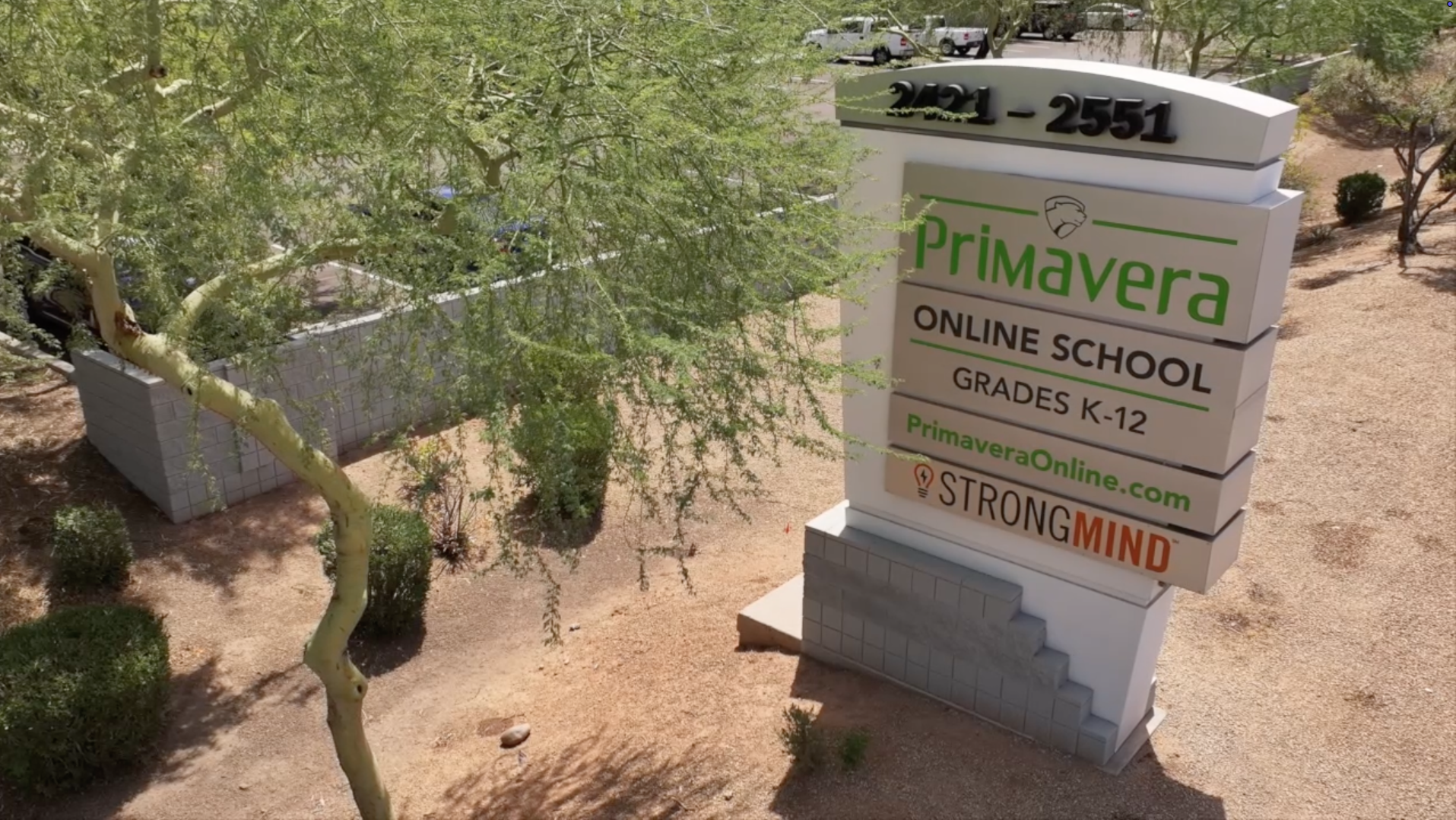
PHOENIX — “Success is measured by our willingness to keep growing, learning, and trying again.”
That was the message to graduates of Primavera Online School during the Class of 2026 commencement, after a year of concern that state regulators would close the school for poor student performance.
Read more Chandler-Gilbert students visited Grand Canyon one day before flash flooding
Primavera’s Founder and CEO Damian Creamer was on hand for graduation day at Arizona Financial Theater in downtown Phoenix in July 2026. More than 1,000 students received diplomas that month.
“Primavera is an Arizona institution,” said Creamer. The school, Arizona’s largest virtual school, is celebrating 25 years of operation, but it has also faced scrutiny about student achievement and corporate profits.
While Primavera is a public school, it is also a private corporation — entirely owned by another private company, StrongMind, according to the school’s 2024-25 audit submitted to the state. Creamer is also the founder and CEO of StrongMind. An Arizona Corporation Commission record shows StrongMind is owned by a single shareholder: the Damian P. Creamer Revocable Trust.
Millions of dollars in Arizona school funding pass from Primavera to StrongMind through no-bid contracts. The school’s 2024-25 audit shows nearly $64 million — 86 percent of Primavera’s taxpayer money — passing through for digital curriculum, management, advertising, and other services.
Some students say they have benefited from the school’s model.
“I was struggling in regular school, and it was easier for me to be able to use my own schedule,” graduating student Tristan Gunter said.
Read more FTC sues Amazon, alleging it overcharged advertisers
“I don’t learn as quick — as fast, and it was easier with taking it slower, doing my time,” graduating student Hannah Blount said.
Primavera’s most recent audit report (2024-25) released to the state also shows it has amassed nearly $10 million in stockholder’s equity. That’s a reflection of the company’s net worth. After subtracting all the liabilities from assets, stockholder equity could be distributed to the company’s owners.
When ABC15 asked about his personal pay or profits, Creamer would not speak about himself. He pushed back on issues of government funding and taxes.
“Let me correct the record on this,” Creamer said. ”Every school in the state of Arizona is paid through ADM, which is the average daily membership. Primavera is the least funded per-pupil school in the state of Arizona.”
Creamer explained that online schools are paid less per-pupil than brick-and-mortar schools, and as a for-profit company, Primavera must pay taxes on profits.
“The legislation in the state of Arizona provides for for-profit charter schools, and we’re a for-profit charter school. So that’s all I have to say about that question,” Creamer said.
State Rep. Nancy Gutierrez sponsored legislation this year that would have required charter schools to publicly disclose the salaries of top administrators. The bill never got a hearing.
“We don’t know what happens to the money once it’s in that private corporation,” Gutierrez said.
Jake Logan, president and CEO of the Arizona Charter Schools Association, lobbied against the Gutierrez bill. He said there’s a lot of financial transparency in the charter school system today.
“They’re required to do an audit every year; they’re required to pass their budgets in public meetings,” Logan said.
The State Board for Charter Schools can intervene if a school fails to meet its financial and educational obligations.
In 2025, the board considered revoking Primavera’s charter after the school received “D” grades from the Arizona Department of Education in three consecutive years.
Primavera students’ scores in math and language arts fell far below state averages, but the school serves many at-risk students. So, the Arizona Department of Education agreed to stop designating Primavera as a traditional school, which boosted it to a “B” rating under alternative schools’ lower performance standards.
“Primavera is not perfect, but it’s a performing alternative school, and it is essential,” said Jessica Pagoulatos, executive director of Primavera.
Creamer disputed the characterization that the school was ever failing.
“Primavera was never a failing school. That is what has been rectified,” Creamer said.
In April 2026, the charter board decided Primavera can remain open under a closely monitored operating plan.
As the class of 2026 graduates and heads off to higher education or the workforce, Creamer says Primavera’s model works for Arizona.
“We’re able to meet their needs exactly where they’re at, provide them the education that they need, and then they are able to finish high school and go on to do things that every other student does,” Creamer said.
Got a News Tip? You can reach ABC15 Senior Investigator Melissa Blasius by email at [email protected] or call 602-803-2506. Follow her on X @MelissaBlasius,Instagram, and Facebook.
Read more Fed report finds rising gas prices have lasting effect on inflation expectations